Tuesday, July 7, 2026
NewsezeNews with Rewards · Earn while you read
+5 credits / query
government

Two Nations, Under Trump and Mamdani
Newseze Wire·Sun, Jul 5, 10:30 PMWire: The Free Press
Open original source Read full story (in-site)
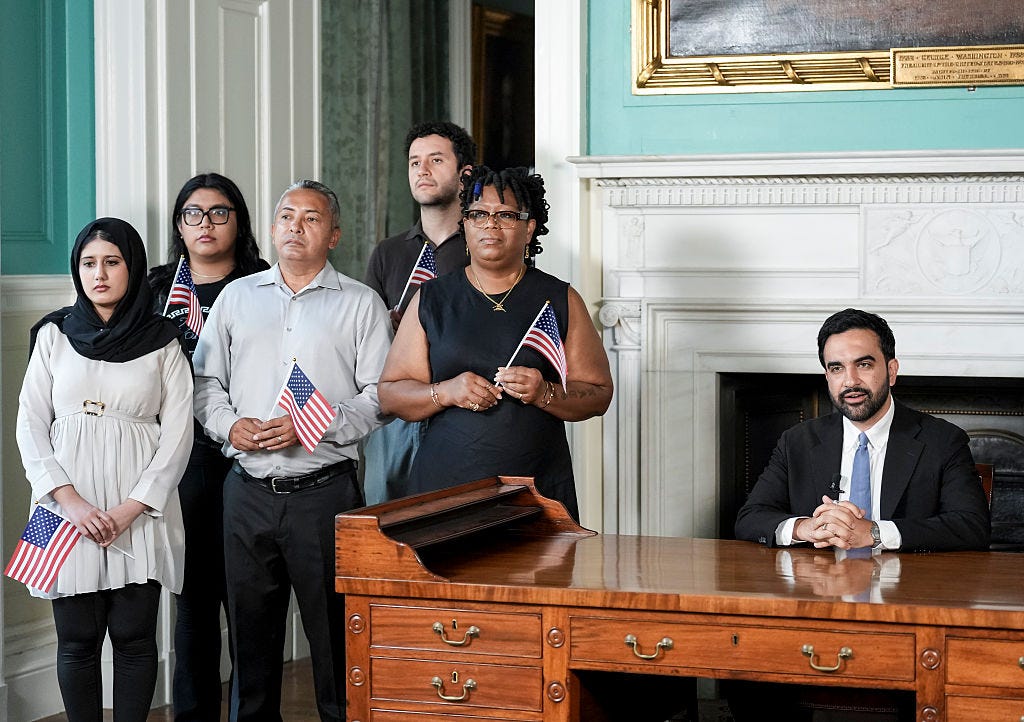
Two Nations, Under Trump and Mamdani

On America’s 250th birthday, Donald Trump and Zohran Mamdani painted radically different portraits of the country. Both missed what makes it truly exceptional, writes Liel Leibovitz.

Sourcing & attribution. Newseze provides AI-curated summaries, narrative framing, and editorial analysis. The underlying reporting was contributed by The Free Press; tap “Open original source” above to read their full reporting and support the contributing newsroom directly.

Newseze Analysis454 words · original commentary
# Two Visions of America, and What Each Gets Wrong As the nation marked its 250th anniversary, two prominent figures offered starkly contrasting interpretations of American identity and purpose. Donald Trump and New York state legislator Zohran Mamdani each presented frameworks for understanding the country's character—one emphasizing strength and restoration, the other highlighting systemic inequality and the need for transformation. Their competing narratives reflect a deeper divide in how Americans currently understand their nation's founding principles and trajectory. Yet according to analysis, both perspectives overlook something fundamental about what has historically distinguished the American project. The divergence between these two visions illuminates genuine fault lines in contemporary American political discourse. Trump's framing gravitates toward themes of national greatness, restoration of former strength, and skepticism toward institutions perceived as compromised or hostile to American interests. Mamdani, conversely, emphasizes structural inequities, historical injustices, and the incomplete nature of American democratic promises. These are not merely rhetorical preferences—they reflect different empirical claims about cause and effect in American history and politics, different assessments of which institutions merit trust, and different priorities for national focus. The fact that such prominent figures can offer such contradictory diagnoses suggests Americans genuinely lack consensus on foundational questions about their country's nature. What complicates this picture is the suggestion that both frameworks miss something essential. Neither the restoration-of-strength narrative nor the systemic-inequality narrative, standing alone, captures what has enabled American resilience across centuries—namely, the capacity for self-correction built into its institutional design, and the pluralistic energy that emerges when competing interests and worldviews operate within a stable constitutional structure. American exceptionalism, to the extent it exists, may rest less on any particular policy outcome or moral standing at any given moment, and more on the mechanisms that allow the nation to adjust course when failing, to incorporate new voices when excluded, and to do so through law rather than violence. Both Trump and Mamdani offer substantive critiques worthy of engagement; neither captures the procedural dynamism that observers across the ideological spectrum have historically recognized as distinctive. The debate between these two visions will continue shaping American politics, and each deserves serious engagement on its merits. But voters and citizens might benefit from stepping back to ask what institutional capacities and shared commitments enable democracies to survive at all—and how America's particular institutions have managed that feat across two and a half centuries, despite profound failures and genuine inequities. The anniversary moment invites not just assessment of where America stands, but reflection on what mechanisms keep it standing. **Worth knowing:** Major ideological disagreements about America's character often reflect genuine uncertainty about facts and causation, not merely different values. Clarifying the empirical claims underlying competing narratives can sharpen democratic debate. Reporting: The Free Press.

Across the aisle

Same story · other lanes

Here's how the same story is being covered by outlets in other lanes. Read both — Newseze doesn't pick a side.

All lanes still pass Newseze's calm filters (no drama, no conspiracy, respect baseline).
Ask Us · Any Story, Any AnswerBe the first to ask

Newseze's algorithm reads the story and answers your question — calmly, factually, with source attribution. No comments, no flame wars — just answers.

No questions yet. Be the first.

Answers reflect Newseze's editorial framework applied under fair use (17 U.S.C. § 107). Not financial, legal, medical, or tax advice. Hate speech and racial slurs are blocked.

Related stories

Chinese Pastor Ezra Jin Released After 266 Days in Prison; Reunites With Family in America
POLITICSTrending Righttrust 92
Chinese Pastor Ezra Jin Released After 266 Days in Prison; Reunites With Family in America

Why it mattersThe release of a religious leader detained by Beijing signals shifting dynamics in China's treatment of faith communities and tests whether diplomatic pressure can secure freedom for imprisoned Americans abroad.

The church leader was reunited with his family in America on Friday, after 266 days in Chinese prison, writes Frannie Block.

ChellaBy Chella·2d ago
WireThe Free Press
Full Analysis Comment PostRead →
Trump says senators would approve Cruz as Supreme Court justice to ‘get him the hell out’
POLITICSTrending Righttrust 78
Trump says senators would approve Cruz as Supreme Court justice to ‘get him the hell out’

Why it mattersPresident Donald Trump brought up the prospect of nominating Sen. Ted Cruz (R-TX) to the Supreme Court in jest on Monday during a White House event on Trump Accounts.

President Donald Trump brought up the prospect of nominating Sen. Ted Cruz (R-TX) to the Supreme Court in jest on Monday during a White House event on Trump Acc…

ChellaBy Chella·10h ago
WireWashington Examiner
Full Analysis Comment PostRead →
REVEALED: Sexual assault allegation fractures Graham Platner’s faithful online following
POLITICSTrending Righttrust 73
REVEALED: Sexual assault allegation fractures Graham Platner’s faithful online following

Why it mattersThe sexual assault allegation against Maine Senate nominee Graham Platner fractured one of his most loyal online communities Monday, with some supporters standing by him while others apologized for dismissing earlier war…

The sexual assault allegation against Maine Senate nominee Graham Platner fractured one of his most loyal online communities Monday, with some supporters standi…

ChellaBy Chella·5h ago
WireWashington Examiner
Full Analysis Comment PostRead →
Supreme Court protected birthright citizenship. Here’s what it didn’t do
POLITICSTrending Righttrust 76
Supreme Court protected birthright citizenship. Here’s what it didn’t do

Why it mattersThe Supreme Court last week struck down an executive order in Trump v. Barbara, over whether a president can redefine birthright citizenship by executive action.

The Supreme Court last week struck down an executive order in Trump v. Barbara, over whether a president can redefine birthright citizenship by executive action…

ChellaBy Chella·8h ago
WireWashington Examiner
Full Analysis Comment PostRead →