Tuesday, June 2, 2026
NewsezeNews with Rewards · Earn while you read
+5 credits / query
world

EU's top diplomat Kaja Kallas in Islamabad for strategic dialogue

Newseze Wire·Mon, Jun 1, 6:47 AMWire: Dawn
Open original source Read full story (in-site)
EU's top diplomat Kaja Kallas in Islamabad for strategic dialogue

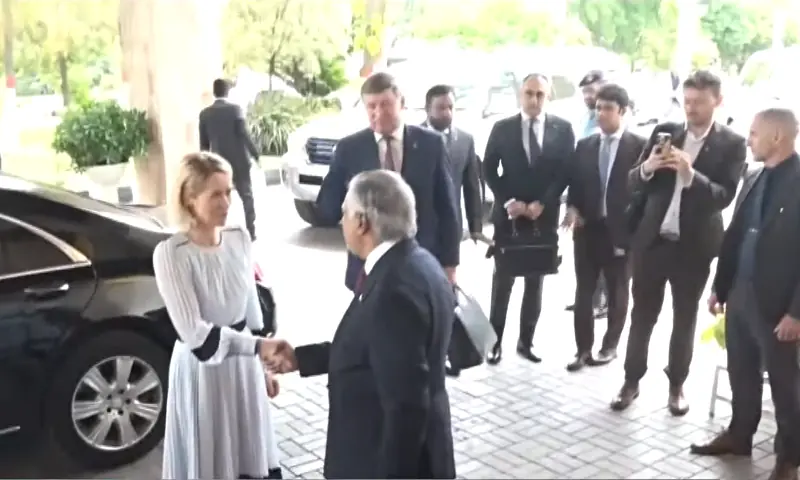
The Euro­­pean Union’s top diplomat, Kaja Kallas, was welcomed on Monday by Deputy Prime Minister and Foreign Minister Ishaq Dar ahead of a strategic dialogue being held in Islamabad. State-run PTV showed visuals of Kallas being welcomed…

Sourcing & attribution. Newseze provides AI-curated summaries, narrative framing, and editorial analysis. The underlying reporting was contributed by Dawn; tap "Open original source" above to read their full reporting and support the contributing newsroom directly.

Newseze Analysis392 words · original commentary
# EU's Top Diplomat Visits Pakistan for Strategic Recalibration The European Union's chief diplomat, Kaja Kallas, arrived in Islamabad this week for high-level strategic talks—a visit that underscores Brussels' intent to deepen engagement with Pakistan at a moment when global alliances are undergoing significant realignment. The visit, marked by formal ceremonies and bilateral discussions with Foreign Minister Ishaq Dar, signals that Europe views Pakistan as a consequential partner in regional stability and broader geopolitical calculations. This diplomatic engagement carries practical weight. Pakistan sits at the intersection of Central Asia, the Middle East, and South Asia—geography that matters to European interests in energy security, counterterrorism cooperation, and trade corridors. The EU has historically prioritized relations with larger South Asian economies, particularly India, but periodic high-level visits to Islamabad reflect recognition that Pakistan's role in regional dynamics cannot be sidelined. For Kallas, whose tenure as EU High Representative began in late 2024, the visit allows her to establish direct relationships with Pakistani leadership and assess firsthand the country's strategic priorities. The timing also matters: it comes as Europe seeks to expand its geopolitical footprint beyond its traditional Atlantic-focused framework, partly in response to shifting U.S. priorities under the new administration. From Pakistan's perspective, the visit represents a chance to reinforce its relevance to Western policymakers and potentially secure support on economic and security fronts. Pakistan faces significant internal challenges—economic stabilization, security concerns, and regional tensions—that benefit from international engagement and investment. Dialogue with the EU's top diplomat can help normalize Pakistan's image in European capitals and potentially influence EU policy positions on matters affecting Pakistan, from trade relations to diplomatic standing. The strategic dialogue format suggests both sides have substantive issues to discuss, whether related to Afghanistan, counterterrorism, or economic cooperation frameworks. The evidence base here is straightforward: senior diplomatic visits of this nature typically precede concrete outcomes, whether ministerial-level working groups, trade discussions, or security cooperation protocols. However, the brief reporting available doesn't yet detail specific agreements or commitments, so assessing the visit's substantive impact requires attention to follow-up announcements from both sides. **Worth knowing:** As major powers reassess their regional strategies, smaller diplomatic visits often signal where influence is being cultivated. Europe's engagement with Pakistan—while less publicized than U.S. or Chinese initiatives—reflects an EU strategy to maintain presence across Asia's critical zones without waiting for crisis moments to establish relationships. Reporting: Dawn.
Reader CommentsBe the first reader · Subscribe to join

No comments yet. Be the first.

Related stories