Sunday, July 12, 2026
NewsezeNews with Rewards · Earn while you read
+5 credits / query
world

Man fatally shot by ICE in Houston was not intended target, DHS says
Newseze Wire·Fri, Jul 10, 10:38 PMWire: BBC World
Open original source Read full story (in-site)
Man fatally shot by ICE in Houston was not intended target, DHS says

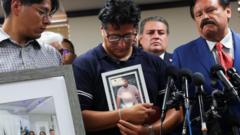
Immigration agents were looking for a different person when they shot Lorenzo Salgado Araujo during a traffic stop, officials say.

Sourcing & attribution. Newseze provides AI-curated summaries, narrative framing, and editorial analysis. The underlying reporting was contributed by BBC World; tap “Open original source” above to read their full reporting and support the contributing newsroom directly.

Newseze Analysis437 words · original commentary
# When Law Enforcement Targets Collide: The Lorenzo Salgado Araujo Case On a Houston street, a tragic encounter between Immigration and Customs Enforcement agents and 34-year-old Lorenzo Salgado Araujo ended in his death during what officials now acknowledge was a case of mistaken identity. According to the Department of Homeland Security, agents were conducting a targeted operation seeking a different individual when the fatal shooting occurred during a routine traffic stop. The incident raises persistent questions about operational protocols, identification procedures, and the consequences when law enforcement actions target the wrong person—concerns that transcend partisan boundaries and speak to fundamental accountability in policing. The DHS acknowledgment that Araujo was not the intended target represents an important admission of fact, yet it underscores a deeper operational question: how does a mistaken identity reach the point of lethal force during what appears to have been a traffic enforcement action? The details matter significantly. ICE agents operate under federal authority to investigate immigration violations and related crimes, but that mandate exists within constitutional boundaries that require reasonable certainty before escalating encounters. Early reporting suggests Araujo may have been armed or presented officers with a perceived threat—factors that would normally justify defensive measures—but the fact that agents were seeking someone entirely different indicates potential gaps in pre-operation intelligence verification or in-field confirmation procedures. Such failures are particularly serious when they result in loss of life. The evidentiary picture remains incomplete. Key details about Araujo's criminal history, whether he was lawfully present in the United States, what specific actions preceded the shooting, and the exact basis for the mistaken identification have not been fully disclosed. These facts are essential for evaluating whether this represents an isolated incident or evidence of systemic identification problems within ICE operations. The agency's willingness to state publicly that the wrong person was targeted suggests either significant evidence supporting this conclusion or a measured approach to acknowledging a serious error. Either way, DHS's statement indicates recognition that something went wrong operationally. The incident also prompts examination of how federal immigration enforcement balances efficiency with precision. Large-scale immigration enforcement operations necessarily involve identifying and locating individuals in communities, but that operational necessity cannot justify targeting individuals without sufficient verification of their identity and involvement. Families of those affected by law enforcement actions deserve clarity about what happened and why. **Worth knowing:** This case will likely influence discussions about ICE training standards, identification verification protocols, and oversight mechanisms. Regardless of one's views on immigration enforcement priorities, the principle that law enforcement should apply lethal force only against clearly identified threats remains foundational to legitimacy and public confidence. Reporting: BBC World.

Across the aisle

Same story · other lanes

Here's how the same story is being covered by outlets in other lanes. Read both — Newseze doesn't pick a side.

All lanes still pass Newseze's calm filters (no drama, no conspiracy, respect baseline).
Ask Us · Any Story, Any AnswerBe the first to ask

Newseze's algorithm reads the story and answers your question — calmly, factually, with source attribution. No comments, no flame wars — just answers.

No questions yet. Be the first.

Answers reflect Newseze's editorial framework applied under fair use (17 U.S.C. § 107). Not financial, legal, medical, or tax advice. Hate speech and racial slurs are blocked.

Related stories