'Miracle' Japanese town has birth rate nearly double national average
'/> </pattern> </defs> <rect width='1200' height='675' fill='url(%23g)'/> <rect width='1200' height='675' fill='url(%23dots)'/> <rect x='60' y='210' width='6' height='80' fill='%23f5a524'/> <text x='90' y='268' font-size='15' font-weight='900' letter-spacing='5' fill='%23f5a524'>WORLD</text> <g font-family='Inter, Arial, sans-serif'> <text x='60' y='320' font-size='44' font-weight='800' fill='rgba(255,255,255,0.97)' letter-spacing='-0.5'>'Miracle' Japanese town has birth rate</text><text x='60' y='376' font-size='44' font-weight='800' fill='rgba(255,255,255,0.97)' letter-spacing='-0.5'>nearly double national average</text> <text x='60' y='620' font-size='14' font-weight='700' letter-spacing='3' fill='rgba(255,255,255,0.7)'>VN EXPRESS INTERNATIONAL · NEWSEZE</text> </g> </svg>)
Nagi, a town in western Japan, has kept its birth rate well above the national average for years by redirecting town spending toward families, even as Japan's fertility rate sank to a record low.
Sourcing & attribution. Newseze provides AI-curated summaries, narrative framing, and editorial analysis. The underlying reporting was contributed by VN Express International; tap “Open original source” above to read their full reporting and support the contributing newsroom directly.
Newseze's algorithm reads the story and answers your question — calmly, factually, with source attribution. No comments, no flame wars — just answers.
No questions yet. Be the first.
Answers reflect Newseze's editorial framework applied under fair use (17 U.S.C. § 107). Not financial, legal, medical, or tax advice. Hate speech and racial slurs are blocked.
Related stories
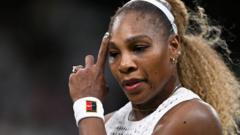
Why it mattersSerena Williams pulls out of her planned Wimbledon doubles appearance with older sister Venus because of a knee injury.
 By Chella·10h ago
Why it mattersThe celebrations in the US capital will feature 850,000 fireworks, a "really long" speech from the president and scorching temperatures.
By Chella·12h ago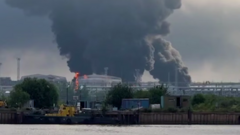
Why it mattersUkrainian President Volodymyr Zelensky says the target is key infrastructure "that generates revenue for Russia's war".
By Chella·14h ago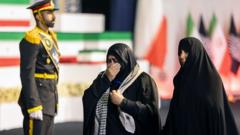
Why it mattersAli Khamenei's body will lie in state in Tehran's Grand Mosalla from Friday ahead of days-long funeral events.
By Chella·23h ago