Friday, July 3, 2026
NewsezeNews with Rewards · Earn while you read
+5 credits / query
government

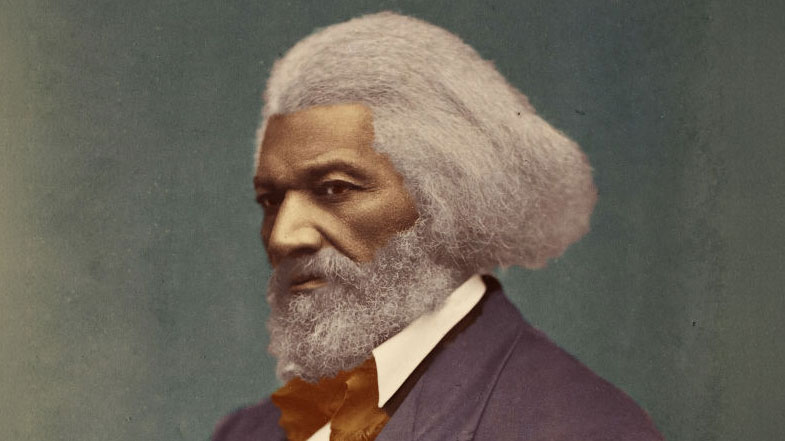
Great Americans: Frederick Douglass Believed in America More Than America
Newseze Wire·Wed, Jul 1, 10:30 PMWire: The Free Press
Open original source Read full story (in-site)
Great Americans: Frederick Douglass Believed in America More Than America

The most famous Independence Day address in history is also the most misquoted. Frederick Douglass, a former slave, wasn’t attacking the founders—he was holding America to their standard, writes David A.

Sourcing & attribution. Newseze provides AI-curated summaries, narrative framing, and editorial analysis. The underlying reporting was contributed by The Free Press; tap “Open original source” above to read their full reporting and support the contributing newsroom directly.

Newseze Analysis426 words · original commentary
# Frederick Douglass's Radical Patriotism and the Power of America's Promise Frederick Douglass delivered his famous July 4th oration in 1852 as a moral argument rooted not in rejection of America's founding principles, but in their vindication. The widely cited speech—often invoked today as a denunciation of the nation itself—has become a casualty of selective quotation and interpretive drift. A closer reading reveals something more intellectually coherent and historically significant: Douglass was mounting a patriotic challenge, insisting that America live up to standards the Founders themselves had articulated. This distinction matters enormously for understanding both Douglass's political philosophy and what his legacy actually teaches. The common narrative treats Douglass's critique as an attack on the American project from without. In reality, his argument operated from within. By emphasizing that he was "a slave," Douglass positioned himself as someone with standing to hold the nation accountable to its own creed—"that all men are created equal." His rhetorical power derived precisely from accepting the founding documents as just and universal in principle, while condemning their violation in practice. This was not anarchism or wholesale rejection; it was demanding that the gap between word and deed be closed. Douglass believed deeply in America's founding vision; what he refused to tolerate was America's failure to enact it. That confidence in the nation's core promise, even amid its gravest moral failing, speaks to a form of patriotism that contemporary readers frequently miss. The misquoting of Douglass serves a modern agenda that suits certain contemporary interests, whether activist or academic. Selectively amplified passages can present him as having lost faith in America's legitimacy entirely, when his actual position was more demanding: that America was *capable* of achieving its ideals and therefore *obligated* to do so. Evidence for this reading lies in his continued residence in America, his sustained political engagement, and his appeals to the nation's conscience rather than calls for its dissolution. Douglass invested his life's work in the belief that the American system, properly reformed and faithfully applied, could deliver on its promise. That faith—wounded by hypocrisy but unbroken—represents a powerful intellectual position deserving restoration to accuracy. **Worth knowing:** Douglass's actual legacy is far more useful than the version often invoked in contemporary debates. He modeled how to love a nation while demanding it become what it claims to be—a position that transcends partisan framing and speaks to any group genuinely invested in civic improvement. His example suggests that principled criticism and authentic patriotism are not opposites but can be expressions of the same moral conviction. Reporting: The Free Press.
Ask Us · Any Story, Any AnswerBe the first to ask

Newseze's algorithm reads the story and answers your question — calmly, factually, with source attribution. No comments, no flame wars — just answers.

No questions yet. Be the first.

Answers reflect Newseze's editorial framework applied under fair use (17 U.S.C. § 107). Not financial, legal, medical, or tax advice. Hate speech and racial slurs are blocked.

Related stories

Why We Love This Country
POLITICStrust 73
Why We Love This Country

Why it mattersBari Weiss on risk. Nellie Bowles on air-conditioning.

Bari Weiss on risk. Nellie Bowles on air-conditioning. Douglas Murray on our vast wilderness. And more.

ChellaBy Chella·26m ago
WireThe Free Press
Full Analysis Comment PostRead →
I’m a proud Democrat, but America’s energy paralysis isn’t Trump’s fault — stop fighting reform
POLITICSTrending Righttrust 76
I’m a proud Democrat, but America’s energy paralysis isn’t Trump’s fault — stop fighting reform

Why it mattersAmerica is entering the biggest energy expansion since the post-war boom, particularly with artificial intelligence fueling a massive data center construction race. Politicians in both parties talk constantly about winni…

America is entering the biggest energy expansion since the post-war boom, particularly with artificial intelligence fueling a massive data center construction r…

ChellaBy Chella·7h ago
WireWashington Examiner
Full Analysis Comment PostRead →
Judge blocks Trump’s USPS mail-in ballot changes
POLITICSTrending Righttrust 76
Judge blocks Trump’s USPS mail-in ballot changes

Why it mattersA federal judge struck down a proposed rule from the Postal Service that would have forced states to turn over their mail-in and absentee voter rolls to the agency. Senior Judge Emmet G.

A federal judge struck down a proposed rule from the Postal Service that would have forced states to turn over their mail-in and absentee voter rolls …

ChellaBy Chella·11h ago
WireWashington Examiner
Full Analysis Comment PostRead →