Thursday, June 25, 2026
NewsezeNews with Rewards · Earn while you read
+5 credits / query
world

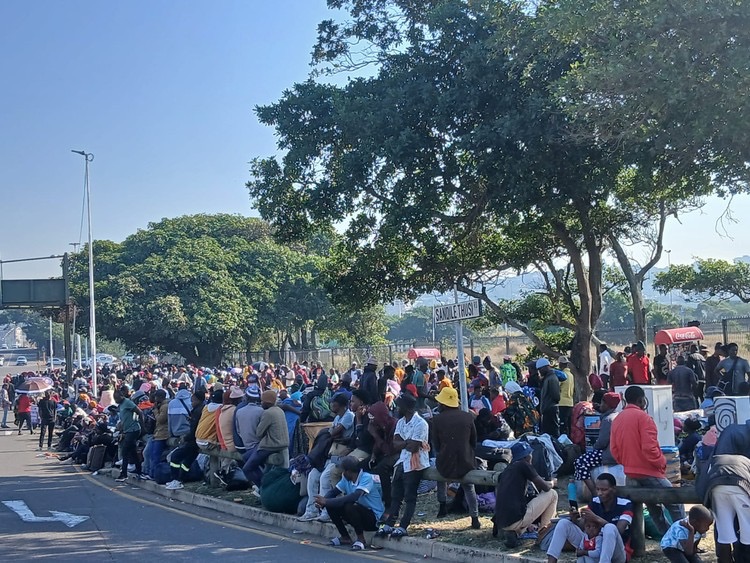
GROUNDUP: Chaos in KZN as immigrants rush to pop-up repatriation sites
Newseze Wire·Tue, Jun 23, 11:47 PMWire: Daily Maverick
Open original source Read full story (in-site)
GROUNDUP: Chaos in KZN as immigrants rush to pop-up repatriation sites

As chaos unfolds in KZN, hundreds of migrants arrive at makeshift repatriation sites, seeking safety and assistance after fleeing violence in their communities.

Sourcing & attribution. Newseze provides AI-curated summaries, narrative framing, and editorial analysis. The underlying reporting was contributed by Daily Maverick; tap “Open original source” above to read their full reporting and support the contributing newsroom directly.

Newseze Analysis438 words · original commentary
# The Repatriation Rush: How KZN's Migration Crisis Became a Test of State Capacity KwaZulu-Natal province is confronting a humanitarian management challenge as hundreds of migrants converge on hastily established repatriation centers, driven by community violence and economic desperation. The scene at these pop-up sites—marked by crowding, resource strain, and competing urgencies—reflects both the scale of migration pressure in South Africa and the institutional gaps in processing such crises. What began as localized violence against foreign nationals has evolved into a broader displacement event that demands coordinated response across immigration, security, and humanitarian agencies. The emergence of makeshift repatriation hubs signals that formal channels for migrant processing are inadequate to handle current demand. When individuals lack trust in traditional bureaucratic routes or fear remaining in communities where they've experienced threats, informal gathering points become inevitable. This pattern suggests that underlying push factors—targeted attacks, economic marginalization, and perceived inability of police to guarantee safety—remain unresolved. The "chaos" descriptor in reporting likely reflects both the genuine safety and sanitation concerns of crowded temporary facilities and the administrative strain of verifying identities, securing travel documents, and coordinating transport across borders. Each of these functions requires functioning institutions; bottlenecks at any stage create visible disorder. The question becomes whether disorder reflects a temporary surge that existing systems can absorb with proper coordination, or deeper structural inadequacy. The evidence here points to competing realities. South Africa's migration policy framework exists on paper, but implementation capacity at provincial and municipal levels often lags. A rush toward pop-up repatriation sites may indicate that migrants perceive these as faster alternatives to standard channels—a rational calculation when formal routes move slowly or demand proof of nationality that displaced persons may lack. For policymakers, this reveals both a problem and potential data: the volume and composition of migrants seeking repatriation can inform future capacity planning. For receiving nations (Zimbabwe, Mozambique, and others), the sudden influx creates reciprocal strain. For South African residents and business owners, the visible disorder at repatriation sites may either increase confidence that migration is being managed or amplify concerns about whether state capacity exists to manage it effectively. The durability of these ad hoc solutions remains uncertain. Pop-up centers may successfully process some migrants, but they're inherently temporary responses to persistent structural issues. Until communities experience measurable improvement in safety, economic opportunity, or police responsiveness, the underlying pressures driving migration won't diminish. **Worth knowing:** This crisis represents both a humanitarian challenge and a stress test of state capacity. How successfully authorities transition from emergency management to sustainable processing will shape not only migrant outcomes but also public confidence in institutional competence. Reporting: Daily Maverick.
Ask Us · Any Story, Any AnswerBe the first to ask

Newseze's algorithm reads the story and answers your question — calmly, factually, with source attribution. No comments, no flame wars — just answers.

No questions yet. Be the first.

Answers reflect Newseze's editorial framework applied under fair use (17 U.S.C. § 107). Not financial, legal, medical, or tax advice. Hate speech and racial slurs are blocked.

Related stories