Tuesday, June 30, 2026
NewsezeNews with Rewards · Earn while you read
+5 credits / query
sports

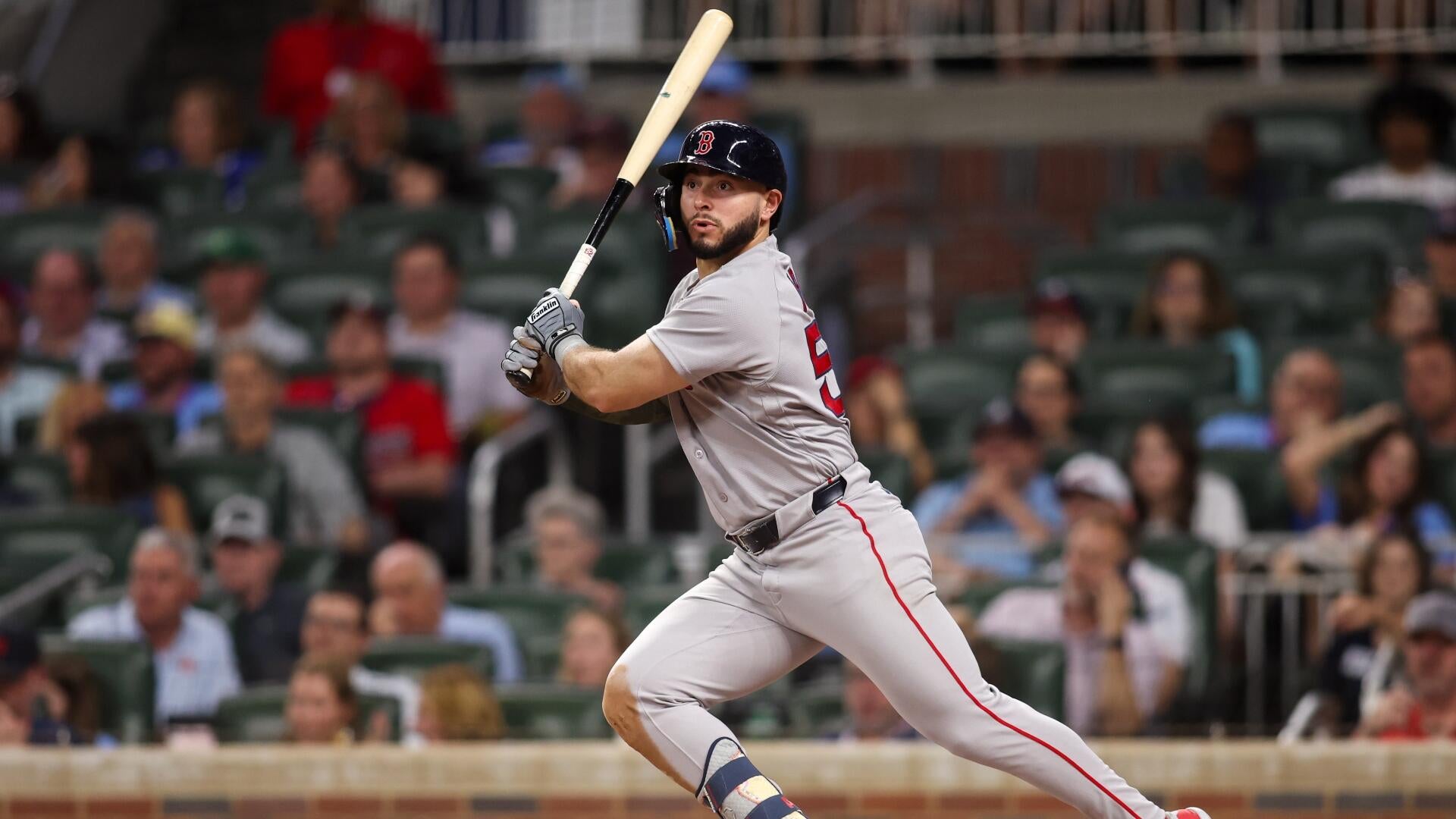
Yankees vs. Red Sox prediction, odds, time: 2026 MLB picks for Sunday Night Baseball from advanced model
Newseze Wire·Sun, Jun 28, 10:39 PMWire: CBS Sports
Open original source Read full story (in-site)
Yankees vs. Red Sox prediction, odds, time: 2026 MLB picks for Sunday Night Baseball from advanced model

SportsLine's model simulated New York Yankees vs. Boston Red Sox 10,000 times and revealed its MLB predictions and Sunday Night Baseball picks

Sourcing & attribution. Newseze provides AI-curated summaries, narrative framing, and editorial analysis. The underlying reporting was contributed by CBS Sports; tap “Open original source” above to read their full reporting and support the contributing newsroom directly.

Newseze Analysis410 words · original commentary
# When Advanced Models Meet October Baseball: What Yankees-Red Sox Projections Actually Tell Us The Yankees-Red Sox rivalry is getting another analytical treatment this season, with SportsLine's computational model running 10,000 simulations of their upcoming Sunday Night Baseball matchup. The exercise represents a broader trend in sports media: deploying machine-learning systems to forecast outcomes in competitions where human judgment has traditionally held sway. These models process historical performance data, injury reports, weather conditions, and dozens of other variables to generate probability distributions rather than simple win-loss predictions. What makes this analytical approach worth understanding is its transparency about uncertainty. When a model simulates a game 10,000 times, it's not claiming prophetic knowledge—it's displaying the range of plausible outcomes weighted by likelihood. If the Yankees win 6,200 of those simulations, the model is saying "based on available data, this team has roughly a 62% win probability," accounting for randomness that no model can eliminate. This matters for casual fans making casual bets, serious handicappers adjusting their own views, and broadcast networks trying to frame compelling matchups. The model becomes a baseline, not a verdict. The predictive power of such systems has improved measurably over the past decade, particularly when analyzing team fundamentals—run differential, bullpen ERA, defensive efficiency—rather than trying to forecast individual performances or injuries. However, limitations remain significant. Models struggle with sudden roster changes, managerial adjustments mid-series, and the simple fact that baseball contains irreducible variance. A .300 hitter strikes out; a journeyman reliever throws a masterpiece. Furthermore, these simulations are only as good as their input data, which means recent performance receives heavy weighting, potentially overvaluing hot streaks or underestimating teams in slumps that are about to turn. For the Yankees-Red Sox contest specifically, the model's output will reflect current-season records, recent form, home-field advantage in the Bronx, and whatever injury status or roster moves preceded the prediction. Readers should treat the accompanying odds as a useful reference point, not a directive. If you're interested in the matchup for sports-betting purposes, comparing the model's probability against actual betting-market odds can identify value—cases where the model and the market disagree substantially. If you're simply curious about Sunday Night Baseball, the detailed reasoning behind the prediction often proves more illuminating than the prediction itself. **Worth knowing:** Advanced sports models have genuine utility for identifying matchup patterns and historical precedent, but they work best alongside human expertise and remain humbled by the irreducible chaos inherent in any single game. Reporting: CBS Sports.
Ask Us · Any Story, Any AnswerBe the first to ask

Newseze's algorithm reads the story and answers your question — calmly, factually, with source attribution. No comments, no flame wars — just answers.

No questions yet. Be the first.

Answers reflect Newseze's editorial framework applied under fair use (17 U.S.C. § 107). Not financial, legal, medical, or tax advice. Hate speech and racial slurs are blocked.

Related stories
Georgia's Daniel Jackson Wins 2026 Golden Spikes Award, Joining Rare Elite in College Baseball
SPORTStrust 95
Georgia's Daniel Jackson Wins 2026 Golden Spikes Award, Joining Rare Elite in College Baseball

Why it mattersJackson becomes only the third Division I player ever to hit 30 home runs and steal 25 bases in a single season, cementing his status as one of college baseball's most dynamic two-way threats ahead of professional evalua…

This season with the Bulldogs, Jackson was the third player in NCAA Division I history to hit 30 homers and steal 25 bases.

MarcusBy Marcus·2h ago
WireYahoo Sports
Full Analysis Comment PostRead →