Thursday, July 2, 2026
NewsezeNews with Rewards · Earn while you read
+5 credits / query
local

Why are ICE agents allowed to hide their faces while the government cracks down on masked protesters?

Newseze Wire·Tue, Jun 30, 11:30 PMWire: Cleveland.com
Open original source Read full story (in-site)
Why are ICE agents allowed to hide their faces while the government cracks down on masked protesters?

Under dictatorships, armed agents of the government routinely conceal their identities. I never thought America would become such a place.

Sourcing & attribution. Newseze provides AI-curated summaries, narrative framing, and editorial analysis. The underlying reporting was contributed by Cleveland.com; tap “Open original source” above to read their full reporting and support the contributing newsroom directly.

Newseze Analysis408 words · original commentary
# The Identity Question in Law Enforcement: Where Lines Get Drawn The question of whether federal immigration agents should be permitted to conduct enforcement operations with covered faces—while the government simultaneously restricts masked protest activities—touches on a genuine tension in how democracies balance security, accountability, and public order. This isn't a simple matter of consistent policy, and understanding the reasoning on both sides reveals why American law enforcement practices have become genuinely contested ground. Federal Immigration and Customs Enforcement (ICE) agents have long operated with substantial anonymity protections, ostensibly to safeguard officer safety during raids and apprehensions. The rationale centers on practical security: agents working in potentially volatile situations may face retaliation if immediately identified. Masked protesters, by contrast, face restrictions in various jurisdictions partly on grounds that anonymity enables lawbreaking without accountability. Yet the asymmetry is real. When armed government representatives wear concealment, citizens lose a basic mechanism for identifying who exercised authority over them—a foundational accountability tool in democratic systems. When protesters mask themselves, they're often restricted on the theory that transparency serves public order. The tension becomes apparent: Is anonymity a security feature when the government uses it, but a public safety threat when citizens do? The evidence here matters. Studies on police accountability show that identifiable officers face measurable consequences for misconduct through complaint systems, civil suits, and public record; anonymity historically correlates with reduced accountability. Simultaneously, officer safety concerns aren't invented—law enforcement does face real threats. What complicates the analysis is that this tension could theoretically be resolved through middle-ground approaches: body cameras with delayed identification protocols, badge numbers visible during operations with name disclosure afterward, or tactical anonymity for specific high-risk scenarios rather than blanket policies. Some departments have moved toward these compromises; others haven't. The Cleveland.com framing itself warrants scrutiny. Comparing American enforcement to "dictatorships" where all armed agents conceal identity sets a high rhetorical bar—most democracies allow some operational anonymity for security personnel. But the underlying point has validity: consistent standards matter. If the principle is "transparency enables accountability," that principle should apply across who wields power, not just against those who challenge it. **Worth knowing:** This isn't primarily a partisan issue. Civil libertarians across the spectrum raise identity accountability concerns; law enforcement professionals across the spectrum cite safety needs. The question worth pressing isn't whether one side is obviously right, but whether policies are internally coherent and whether middle-ground solutions—preserving safety while maintaining accountability—are genuinely being explored. Reporting: Cleveland.com

Across the aisle

Same story · other lanes

Here's how the same story is being covered by outlets in other lanes. Read both — Newseze doesn't pick a side.

All lanes still pass Newseze's calm filters (no drama, no conspiracy, respect baseline).
Ask Us · Any Story, Any AnswerBe the first to ask

Newseze's algorithm reads the story and answers your question — calmly, factually, with source attribution. No comments, no flame wars — just answers.

No questions yet. Be the first.

Answers reflect Newseze's editorial framework applied under fair use (17 U.S.C. § 107). Not financial, legal, medical, or tax advice. Hate speech and racial slurs are blocked.

Related stories
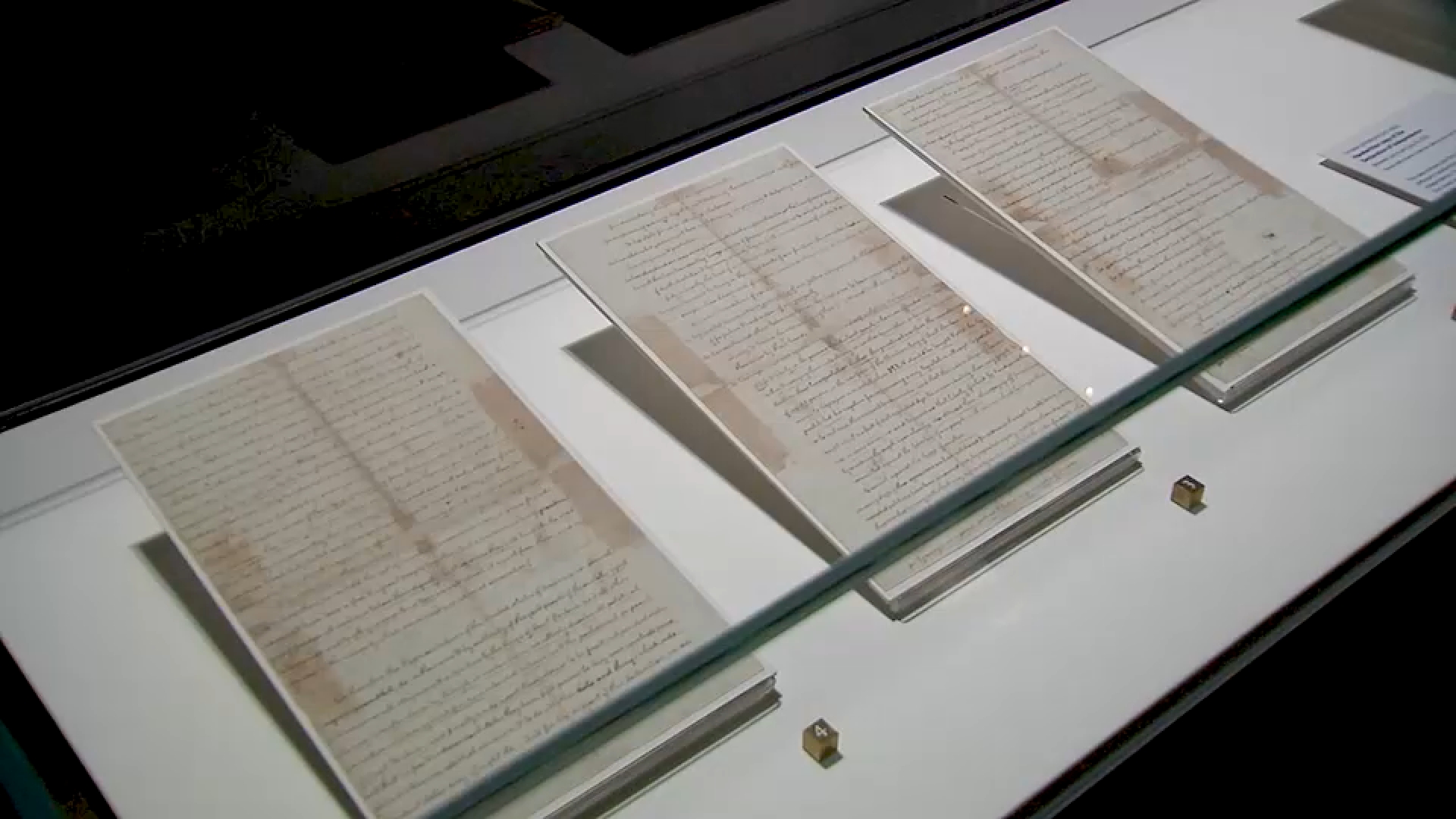
New York Public Library opens rare Jefferson manuscript to visitors this month
LOCALtrust 97
New York Public Library opens rare Jefferson manuscript to visitors this month

Why it mattersOne of the nation's founding documents in Thomas Jefferson's own hand is now accessible to the public, allowing New Yorkers a rare chance to witness the constitutional origins of American law and liberty.

Visitors with tickets can view the manuscript which is handwritten by Thomas Jefferson.

ChellaBy Chella·2h ago
WireABC 7 New York
Full Analysis Comment PostRead →
Brooklyn Launches Affordable Housing Complex with Rents Starting at $777
LOCALtrust 87
Brooklyn Launches Affordable Housing Complex with Rents Starting at $777

Why it mattersAs New York faces a severe housing shortage, a new mixed-income residential development offers immediate options for working families earning between $30K and $183K annually, demonstrating one market-based approach to th…

NEW YORK (PIX11) -- A New affordable housing opportunity with an outdoor terrace, an elevator, and high-speed internet will offer dozens of rental units beginni…

ChellaBy Chella·2h ago
WirePIX 11 New York
Full Analysis Comment PostRead →